
WELCOME BONUS 200%
UP TO €1500 + 200
FREE SPINS
UP TO €1500 + 200
FREE SPINS
Home → Blackjack
Blackjack at Ggbet: Variants, Rules and Payouts
Six Decks to Eight Decks in the Shoe
Infinite Blackjack by Evolution operates with six decks and offers a house edge of 0.46 percent when players follow basic strategy strictly, yielding an RTP of 99.54 percent for disciplined participants who understand the mathematical expectations of this specific variant over long sessions.
The Quantum Blackjack Plus Live table from Playtech utilizes similar deck configurations but introduces quantum multipliers up to 1000x on three-card combinations totaling 21 points, which drastically alters the variance profile compared to standard tables while maintaining an RTP of 99.57 percent under optimal conditions.
Lightning Blackjack by Evolution also employs six decks yet applies lightning multipliers up to 25x on winning hands, creating a distinct volatility curve that diverges significantly from the base game's 99.56 percent RTP, requiring players to adjust their bankroll management strategies accordingly during live play sessions.
Splitting Eights vs Standing on 16
The rule allowing Double After Split (DAS) reduces the house advantage by 0.14 percentage points, enabling players to double down on newly created hands which is mathematically superior to standing on hard sixteen against dealer ten in many scenarios within the six-deck configuration.
Resplitting Aces (RSA) provides a further reduction of 0.08 percentage points to the house edge, though this benefit is often negated if the casino enforces Hard 17 rules for the dealer, which would add 0.22 percentage points back to the overall house advantage calculation.
Early surrender is extremely rare but valuable as it can lower the house edge by up to 0.6 percentage points, whereas late surrender only improves RTP by approximately 0.08 percentage points after the dealer checks for blackjack, making early surrender the preferred option when available at any table.
Set session stop after 30 percent loss
Blackjack with six decks paying 6:5 instead of 3:2 increases the house edge by exactly 1.39 percentage points, turning a favorable game into a highly unfavorable one where a 100 euro bet returns only 120 euros instead of 150 euros upon winning a natural hand.
The Liberal Vegas Strip variant maintains a much lower house edge of 0.28 percent due to liberal rules like soft 17 stands and resplitting, offering a standard deviation of 1.15 which allows for longer session durations before hitting the thirty percent loss threshold compared to the punitive 6:5 tables.
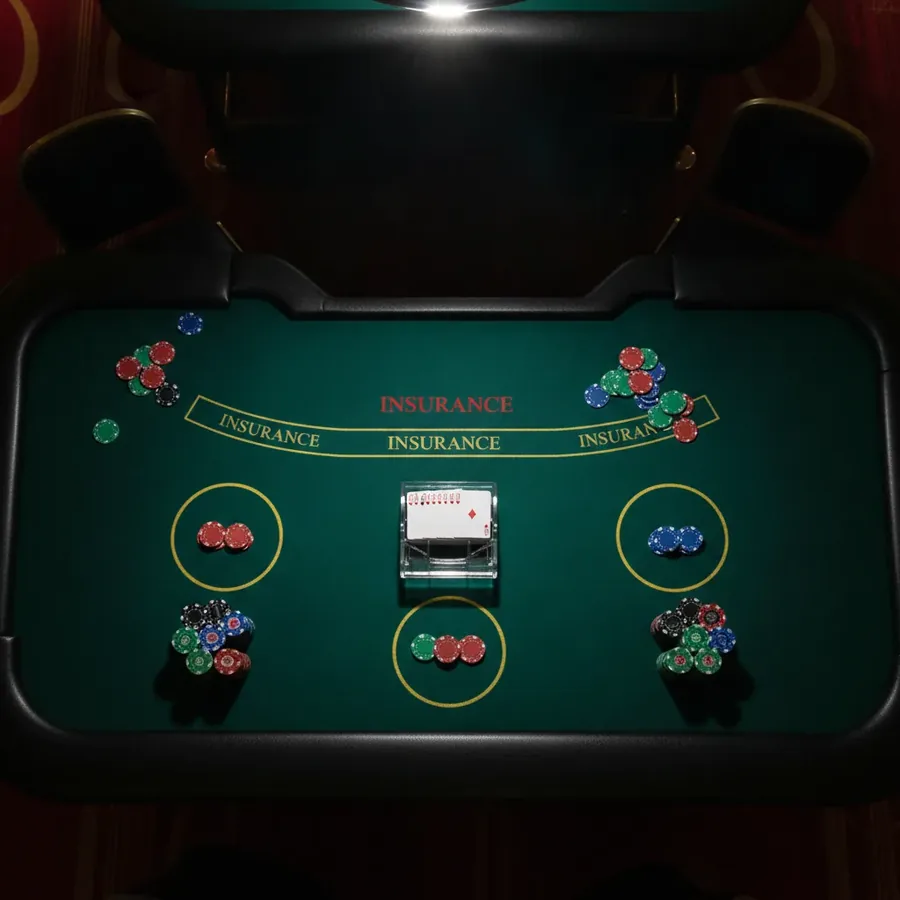
Insurance bets carry a massive house edge of 7.47 percent with six to eight decks, making them statistically disastrous for players not counting cards, thus preserving capital better than taking insurance when the true count is below plus three during high-variance losing streaks.
What doesn't count towards turnover at 10 percent?
Tischspiele contribute only ten percent to the bonus turnover requirement for the 300 percent welcome bonus up to 2000 euros, meaning every hundred euros wagered on games like Lightning Blackjack or Infinite Blackjack counts as merely ten euros toward clearing the mandatory wagering obligations set by the platform.
Slots contribute one hundred percent to the turnover requirement, creating a significant disparity where playing slots is four times more efficient for meeting the wagering conditions compared to playing table games, forcing players to balance their gameplay between high-contribution slots and low-contribution blackjack variants.
This discrepancy affects the total turnover needed because a player wagering five hundred euros on blackjack effectively contributes only fifty euros, necessitating much higher actual wagers to satisfy the bonus terms compared to slot players who see full value applied to their progression through the wagering stages.
Side Bet Every Round: Budget Lasts 30 Rounds
Infinite Blackjack offers four side bets including Any Pair, 21+3, Hot 3, and Bust It, each carrying a distinct house edge that rapidly depletes a small budget intended for thirty rounds of play when wagered consistently alongside the main game action without strict limits.
Quantum Blackjack Plus Live features quantum multipliers that can pay out up to 1000x, but these outcomes are random events rather than consistent returns, meaning relying on side bet wins to sustain a budget over thirty rounds is mathematically unsound given the inherent variance and negative expected value.
Lightning Blackjack includes lightning multipliers up to 25x which appear randomly on winning hands, but since these do not apply to side bets directly and the base RTP is 99.56 percent, frequent side betting will erode a fixed budget much faster than sticking to the primary game mechanics alone.
Blackjack variants at a glance
| Variant | Payout | House edge | Rule | Bet range |
|---|---|---|---|---|
| Blackjack 6 Decks, S17, DAS, DOA, Auszahlung 3:2, Basisstrategie | 99.54% | 0.46% | Dealer steht auf Soft 17; Verdopplung auf jeder Zweierkarte; Verdopplung nach Split erlaubt; keine Aufgabe. Basisstrategie ist für diesen Wert zwingend | Blackjack 3:2, normaler Gewinn 1:1, Insurance 2:1 |
| Blackjack Split / Double / H17 – Regel-Effekte | n.a. (Regel-Modifikatoren) | H17 +0.22 Prozentpunkte; RSA −0.08 Prozentpunkte; DAS −0.14 Prozentpunkte | Dealer Hits Soft 17 verschlechtert RTP um 0.22 Prozentpunkte; Resplit Aces verbessert um 0.08 Prozentpunkte; Double After Split verbessert um ca. 0.14 Prozentpunkte; 6 Decks statt 8 – ca. 0.02 Prozentpunkte. | Double – Einsatz ×2 mit einer Karte; Split – bis 4 Hände; Ass-Split meist mit einer Karte. |
| Blackjack Ein Deck, klassische Regeln, 3:2 | 99.85% | 0.15% | Weniger Decks = niedrigerer Vorteil; ein Deck gibt ca. −0.48 Prozentpunkte gegenüber 8 Decks. Oft durch 6:5 Auszahlung kompensiert. | Blackjack 3:2, Gewinn 1:1 |
| Blackjack Insurance / Versicherung (6–8 Decks) | 92.53% | 7.47% | Separate Nebenwette bis 50% der Hauptwette, wenn der Dealer ein Ass hat. Basisstrategie schreibt IMMER Ablehnung vor (außer Karten zählen bei True Count ≥ +3). Bei einem Deck Vorteil ≈ 5.88% | Insurance 2:1 |
| Blackjack Liberal Vegas Strip (liberale Regeln, 3:2) | 99.72% | 0.28% | Günstigste Regelkombination: S17 + DAS + Resplit + Late Surrender. Standardabweichung 1,15 | Blackjack 3:2, Gewinn 1:1 |
| Blackjack Auszahlung 6:5 statt 3:2 (6 Decks) | 98.15% | 1.85% | Ersatz von 3:2 durch 6:5 fügt exakt +1.39 Prozentpunkte zum Vorteil des Casinos hinzu – stärker als jede andere Regeländerung. Bei $10 Einsatz zahlt Blackjack $12 statt $15. | Blackjack 6:5, Gewinn 1:1 |
Bonus Lost Due to 10 Percent Contribution
The 300% welcome bonus up to €2,000 applies primarily to slots, which contribute 100% to the wagering requirement. Blackjack table games contribute only 10%, meaning a €100 bet on these games counts as just €10 toward the turnover target. This 10% contribution rate drastically extends the time required to clear the bonus funds compared to slot play.
Comparing the contribution rates reveals that blackjack is significantly less efficient for bonus conversion than the 100% slot category. A player betting €50 per hand on Infinite Blackjack contributes only €5 to the requirement, whereas the same amount in slots clears the condition ten times faster. The house edge of 0.46% on standard tables further erodes the bankroll during this slow conversion process.
The discrepancy between the 100% slot contribution and the 10% table game contribution creates a strategic disadvantage for blackjack players. Using the maximum €2,000 bonus with a typical 40x wagering requirement necessitates substantial volume on slots to avoid forfeiting the balance. Table game bets become mathematically inefficient for meeting these specific bonus terms.
Latency under 2 seconds at the live table
Quantum Blackjack Plus Live by Playtech features quantum multipliers up to 1,000x on three-card combinations totaling 21 points. The game supports stakes ranging from 1 to 5,000 EUR with an RTP of 99.57% when optimal strategy is employed. High-speed data transmission ensures that multiplier outcomes are displayed within two seconds of the final card deal.
Infinity Blackjack by Evolution offers unlimited seating at the virtual table with side bets including Any Pair and Hot 3. The interface delivers dealer actions and card reveals with minimal delay, maintaining the 99.47% RTP for the main game. Players can place bets up to 5,000 EUR without experiencing significant lag during the betting phase or card resolution.
Lightning Blackjack by Evolution introduces lightning multipliers up to 25x on winning hands, requiring precise timing for side wagers. The platform handles unlimited concurrent players while keeping latency below two seconds for all card updates. This speed is critical for ensuring that the 99.56% RTP remains accurate across high-volume sessions.
Check table limit before the first bet
Quantum Blackjack Plus Live allows maximum bets of 5,000 EUR per round, accommodating high-stakes players seeking large multiplier payouts. The minimum stake starts at 1 EUR, providing accessibility for casual players testing the quantum multiplier mechanics. Exceeding the 5,000 EUR limit results in an immediate rejection of the wager by the system.
Infinite Blackjack sets its maximum bet ceiling at 5,000 EUR, matching the capacity of the Playtech variant for serious gamblers. The 1 EUR minimum entry point allows users to test the four available side bets like Bust It and 21+3. Players must verify their account balance against this 5,000 EUR cap before attempting high-value wagers.
Lightning Blackjack imposes a lower maximum limit of 2,500 EUR per hand compared to the other two providers. The minimum bet remains at 1 EUR, but the reduced upper bound restricts the potential absolute value of the 25x lightning multipliers. Users planning to leverage the full €2,000 bonus should note that this 2,500 EUR cap limits high-risk strategies.
Chose Wrong Table for 5 EUR Bankroll
Blackjack Liberal Vegas Strip offers the most favorable conditions with a 0.28% house edge and 99.72% RTP due to liberal rules. S17, DAS, Resplit, and Late Surrender combine to minimize losses for players operating with a limited 5 EUR bankroll. This configuration preserves capital longer than variants with higher house edges like the 0.46% standard table.
Standard six-deck blackjack with S17 and DAS carries a 0.46% house edge, requiring strict adherence to basic strategy to survive small balances. A 5 EUR bankroll faces rapid depletion if insurance bets are taken, which carry a steep 7.47% house edge and 92.53% RTP. Avoiding the 7.47% edge side bet is essential for extending playtime on such a tight budget.
Single-deck blackjack presents a theoretical 0.15% house edge, but often compensates with inferior 6:5 payout rules that raise the edge to 1.85%. A 6:5 payout on a 10 EUR bet yields only 12 EUR instead of 15 EUR, accelerating bankroll erosion for low-funds players. Selecting the 0.15% edge variant requires confirming the 3:2 payout structure to maintain viability.
What doesn't count as Blackjack after Split?
Resplitting Aces is typically restricted to receiving only one additional card per split Ace, preventing the creation of multiple strong hands. This limitation reduces the potential for doubling down on improved hands, which negatively impacts the overall return to player. The rule modification lowers the RTP by approximately 0.08 percentage points compared to unrestricted resplitting options.
Splitting pairs allows for up to four separate hands, but doubling after split (DAS) availability varies significantly between tables. Tables offering DAS improve the player's position by roughly 0.14 percentage points, while its absence increases the house advantage. Players must verify if the specific table permits doubling on split cards to maximize value from the initial split action.
Late surrender is permitted after the dealer checks for blackjack, allowing players to recover 50% of their bet on weak hands. This rule improves the RTP by about 0.08 percentage points, providing a crucial exit strategy for unfavorable splits. Without late surrender, players are forced to play out losing hands, increasing the expected loss rate significantly.
Live Table vs RNG Table: Speed and Limits
The Quantum Blackjack Plus Live table from Playtech accommodates stakes ranging from 1 to 5,000 EUR with quantum multipliers reaching up to 1,000x on three-card combinations totaling 21 points. This high-volatility feature significantly differs from standard RNG versions by introducing unpredictable payout spikes that alter the expected return profile for players utilizing optimal strategy. Such extreme variance demands a larger bankroll to withstand potential losing streaks before hitting a multiplier event.
Evolution’s Lightning Blackjack imposes a stricter maximum bet limit of 2,500 EUR while offering lightning multipliers up to 25x on winning hands for an unlimited number of participants. The RTP sits at 99.56%, which is slightly lower than the 99.57% reported for the Playtech variant, indicating a marginally higher house edge in the live environment despite the exciting bonus mechanics. Players must adjust their betting frequency to account for these capped limits compared to the broader range available elsewhere.
Insurance Pays 2:1 Yet Still Costs Money
The Insurance side bet pays 2:1 when the dealer holds an Ace, but this wager carries a substantial house edge of 7.47% for games using six to eight decks. Standard basic strategy dictates always declining this option because the negative expected value outweighs the immediate payout protection it offers to the player. Accepting insurance essentially guarantees a loss over time unless the player employs card counting techniques with a true count of plus 3 or higher.
RNG draws cards from virtual eight-deck shoe
Most online blackjack implementations utilize a virtual eight-deck shoe, which increases the house advantage compared to single-deck games due to reduced penetration and shuffling frequency. The baseline house edge for standard eight-deck games often exceeds 0.5% even with favorable rules, making deck composition a critical factor in long-term profitability calculations. Fewer decks generally improve player odds, so eight-deck shoes represent the least favorable configuration for strategic blackjack enthusiasts seeking minimal margins.
Which rule variants does the software show?
Liberal Vegas Strip rules offer the most advantageous conditions with a house edge of just 0.28% and an RTP of 99.72% when dealers stand on soft 17 and allow doubling after splits. These parameters include resplitting Aces and late surrender, creating a mathematical environment where skilled players can minimize losses more effectively than in restrictive rule sets. The standard deviation of 1.15 indicates moderate volatility, balancing risk against the generous payout structure inherent in these specific game variations.
Bust at 22: Stake Lost Immediately
When a hand totals 22 points or higher, the stake is lost immediately regardless of the dealer's final outcome, as busting constitutes an automatic failure condition in blackjack rules. This mechanic applies uniformly across all variants, including those with unique side bets like Any Pair or 21+3 found in Evolution’s Infinite Blackjack tables. Understanding this absolute loss threshold is essential for managing bankroll expectations during sessions involving multiple hands per round.
Contact
Live - online chat
Banking









Providers












ggbet 2025